Circa 1921 · Kenzingen, Black Forest, Germany
A century-old copper brew kettle from the Weber family brewery — 250 years of tradition, preserved in a single, extraordinary vessel. The only known piece of this brewery in the United States.
Inquire About This Piece →The Story
In the medieval town of Kenzingen, nestled at the edge of Germany's Black Forest in the Upper Rhine valley of Baden-Württemberg, brewing was not merely an industry — it was identity. At its peak, this town of just 1,150 residents was home to as many as eleven breweries, an extraordinary concentration of craft that dates back to the 1600s.
Among them was Brauerei zum Hirschen — the Stag Brewery — operated by the Weber family for roughly 250 years. Founded around 1649 at Hirschengasse 4, the brewery passed through generations of Webers, each continuing a tradition of small-batch, copper-kettle brewing that defined the region.
Norbert Weber, the fifth generation, took over operations in 1980. He continued brewing through the end of the 20th century, but like hundreds of small German breweries, the economics of modern consolidation eventually caught up. The brewery stopped active production around 2004 and produced its final brew in 2007.
The original brewery building at Hirschengasse 4 has since been converted into a vacation rental — "Braviscasa Feriendomizil Kenzingen, ehem. Brauerei Hirschen." The brewing equipment is gone from the site. But this kettle survived.
Weber family founds Brauerei zum Hirschen in Kenzingen
Braupfanne Nr. 1 commissioned and first calibrated by the Eichamt
Post-war re-inspection — gap likely due to World War II
Norbert Weber (5th generation) takes over brewery operations
Final Eichamt inspection stamp applied to the kettle
The final brew is produced at Brauerei zum Hirschen
The kettle resides in Colorado — the only known Weber/Hirschen equipment in the United States
"One of countless small German breweries lost to industry consolidation — this kettle is what survived."
Authentication
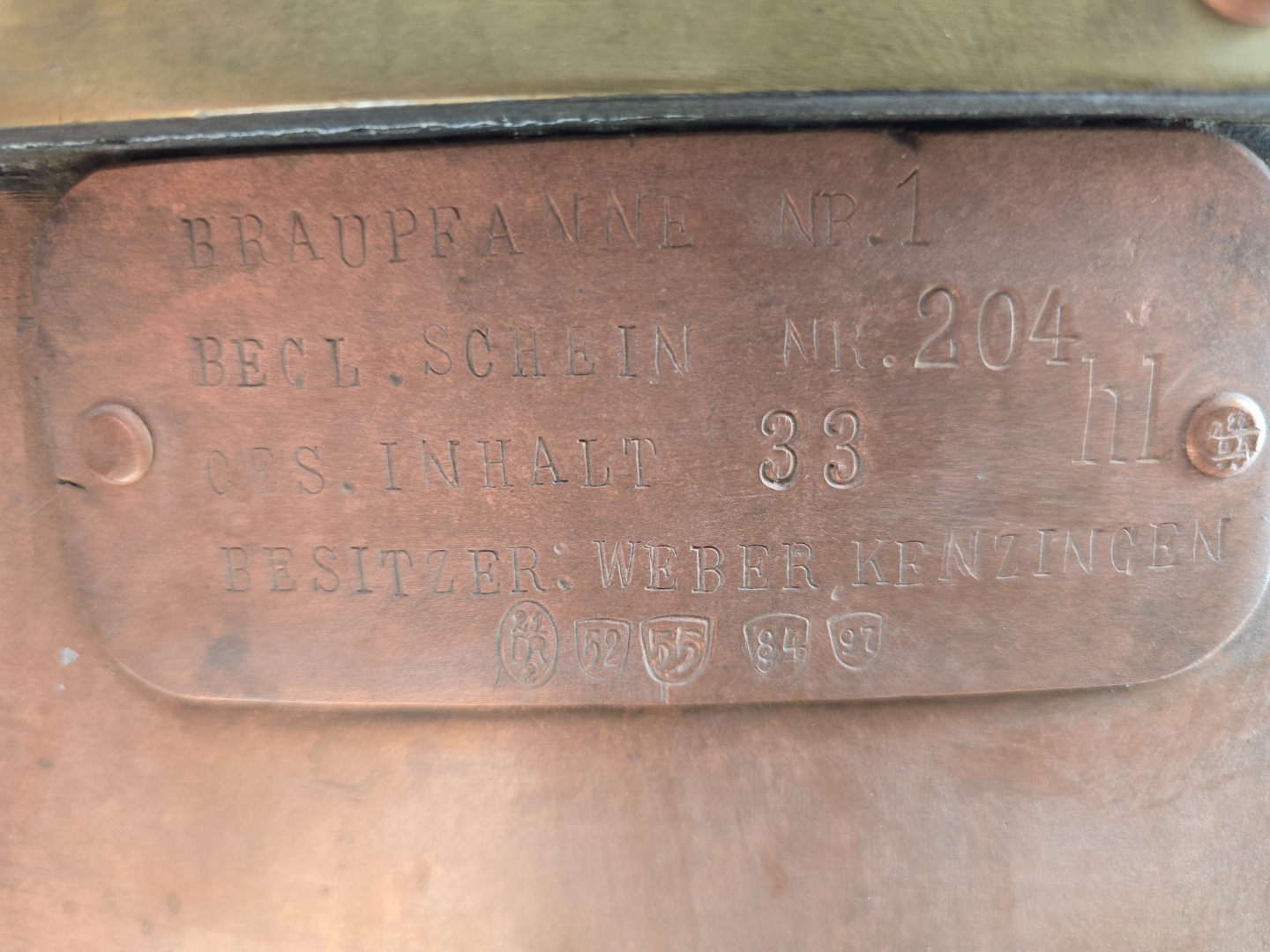
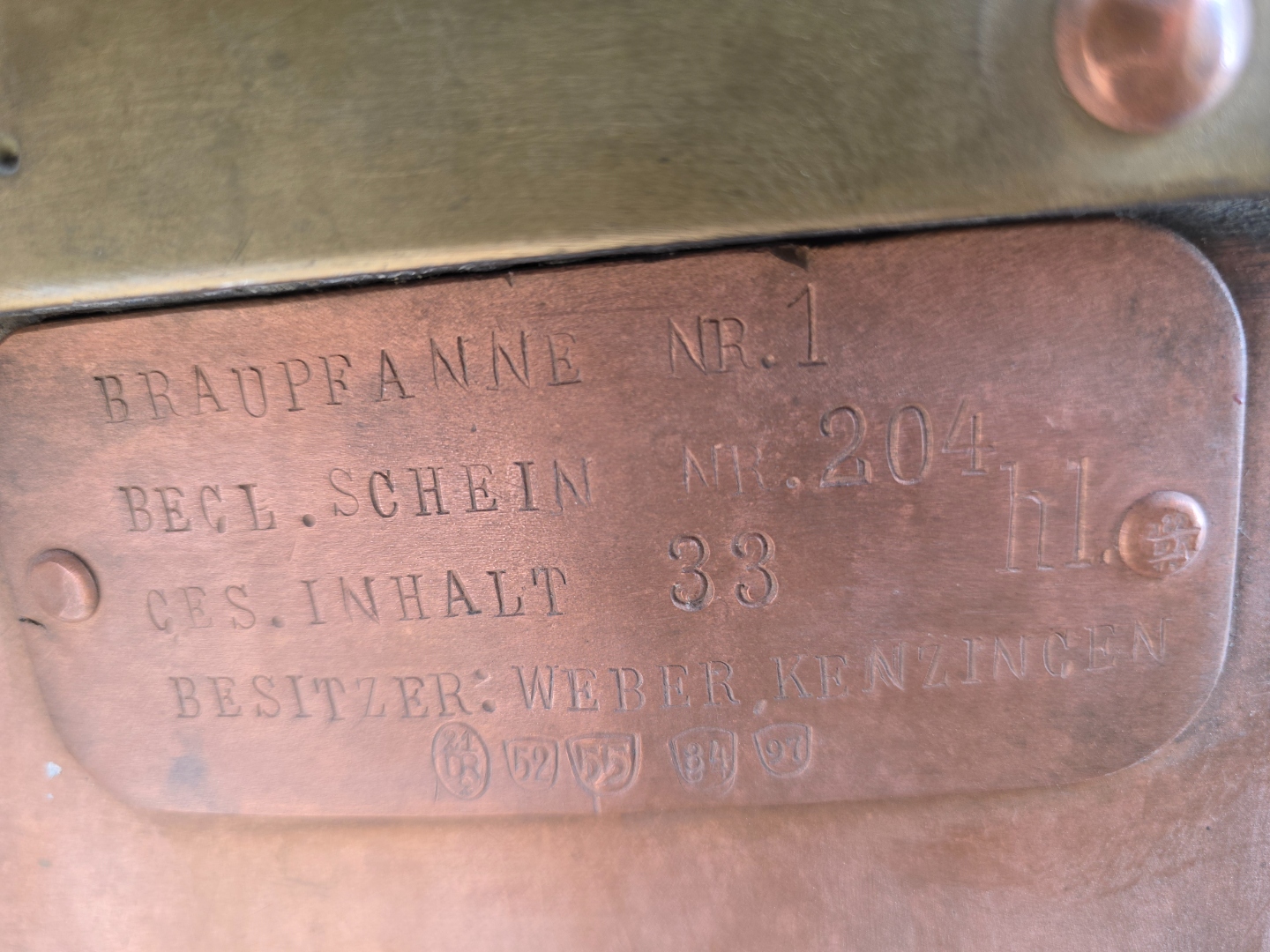
Most antique copper vessels on the market are anonymous — no maker, no origin, no story. This one is fully documented with an original copper nameplate and five official German government inspection stamps spanning over seven decades.
Five official German Bureau of Weights and Measures stamps, each confirming government calibration and authorization for commercial use:
The Craft
A Braupfanne is the wort boiling vessel — the heart of the brewhouse. After mashing converts starches to sugars, the liquid wort is transferred to this kettle for a vigorous, rolling boil. This is where beer develops its character.
During the boil, hops are added at precise intervals — early for bitterness, late for aroma. The intense heat sterilizes the wort, coagulates unwanted proteins (the "hot break"), and drives off volatile off-flavor compounds like dimethyl sulfide (DMS), which would otherwise give the beer an unpleasant cooked-corn taste.
The boil also concentrates the wort, increasing sugar density and deepening color — essential for rich German lagers. In traditional German decoction mashing, portions of the mash were also boiled in this vessel to achieve the complex malt flavors characteristic of Bavarian and Baden beers.
Copper conducts heat 25 times more efficiently than stainless steel. This enables rapid, even heating across the entire vessel — critical for a uniform boil and preventing scorching. The result: consistent extraction and cleaner flavor.
Copper reacts with hydrogen sulfide (H₂S) and dimethyl sulfide (DMS) during the boil, forming copper sulfide that precipitates out. This catalytic purification removes off-flavors that no amount of stainless steel brewing can match.
Copper surfaces naturally inhibit microbial growth — a property known since antiquity. In a pre-industrial brewery operating without modern sanitation, this was not a luxury but a necessity for producing safe, drinkable beer.
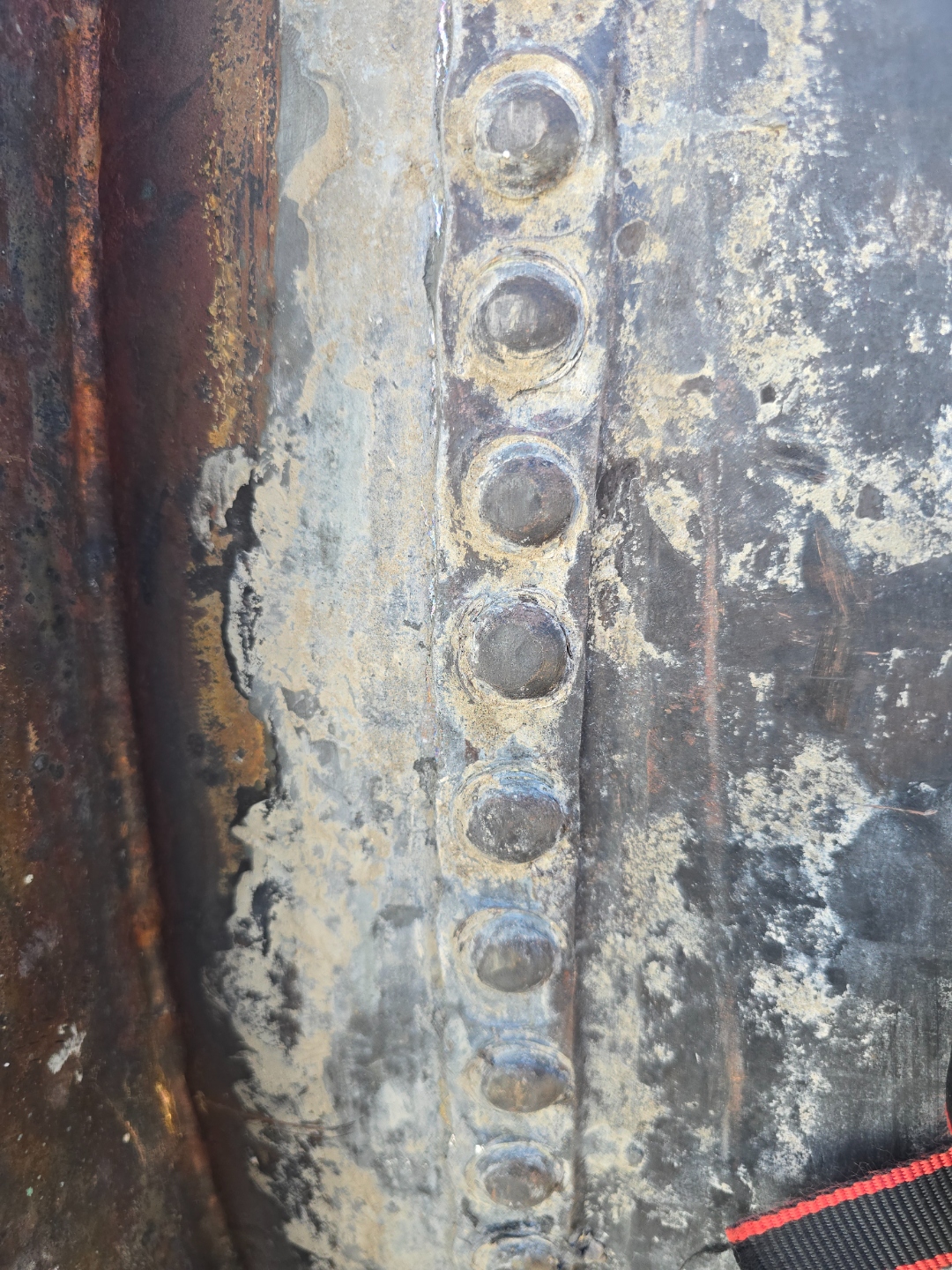
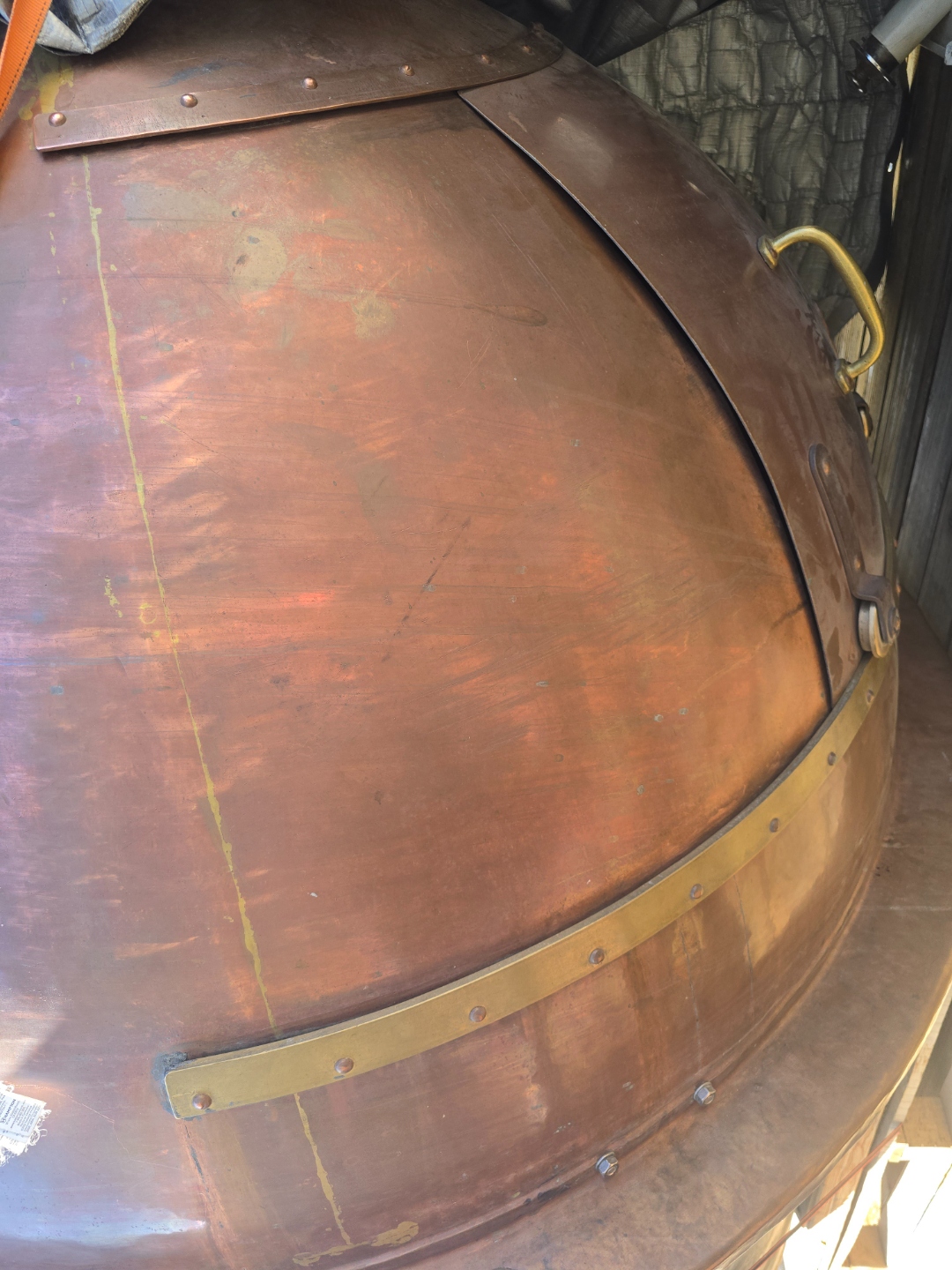
Copper's workability made it the only practical material for hand-forming large, curved brewing vessels before modern fabrication. Every rivet, every seam on this kettle was shaped by hand — a level of craft impossible to replicate economically today.
Gallery
Specifications
| Date | Circa 1921 (Weimar Republic era) |
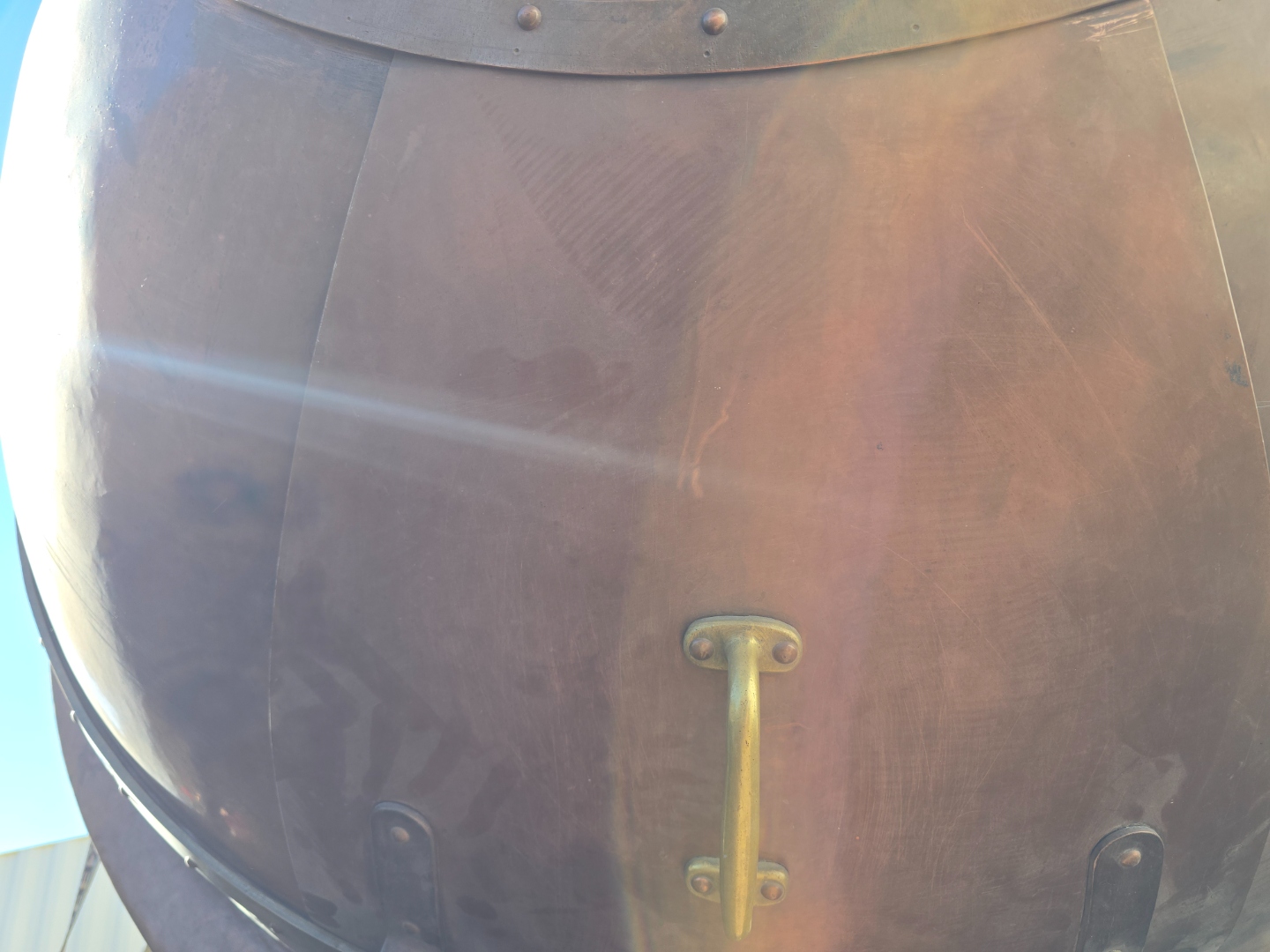
| Material | Heavy-gauge copper body with brass fittings and handle |
| Capacity | 33 hectoliters / ~870 US gallons / ~3,300 liters |
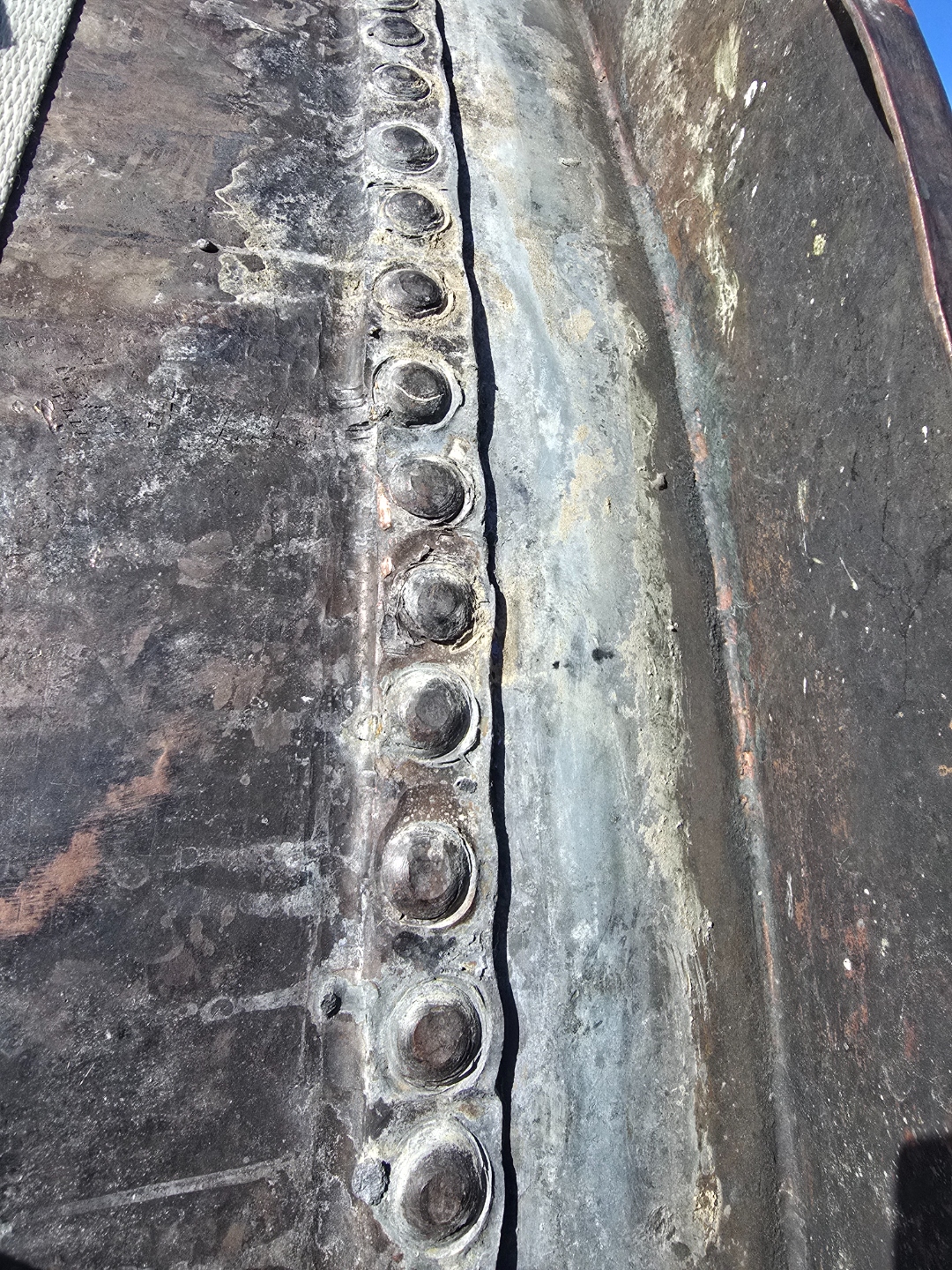
| Construction | Riveted copper sheet panels (traditional hand-built) |
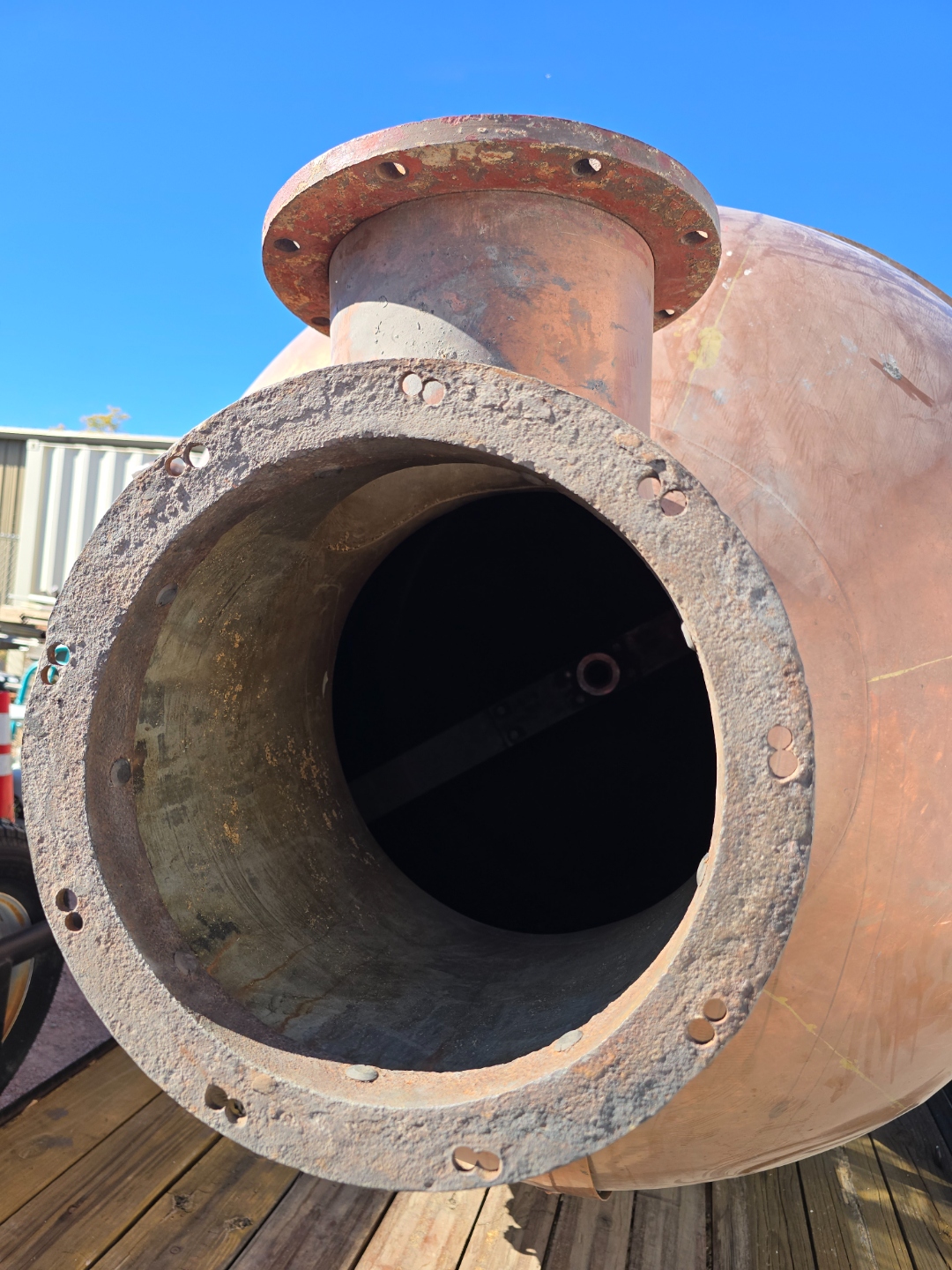
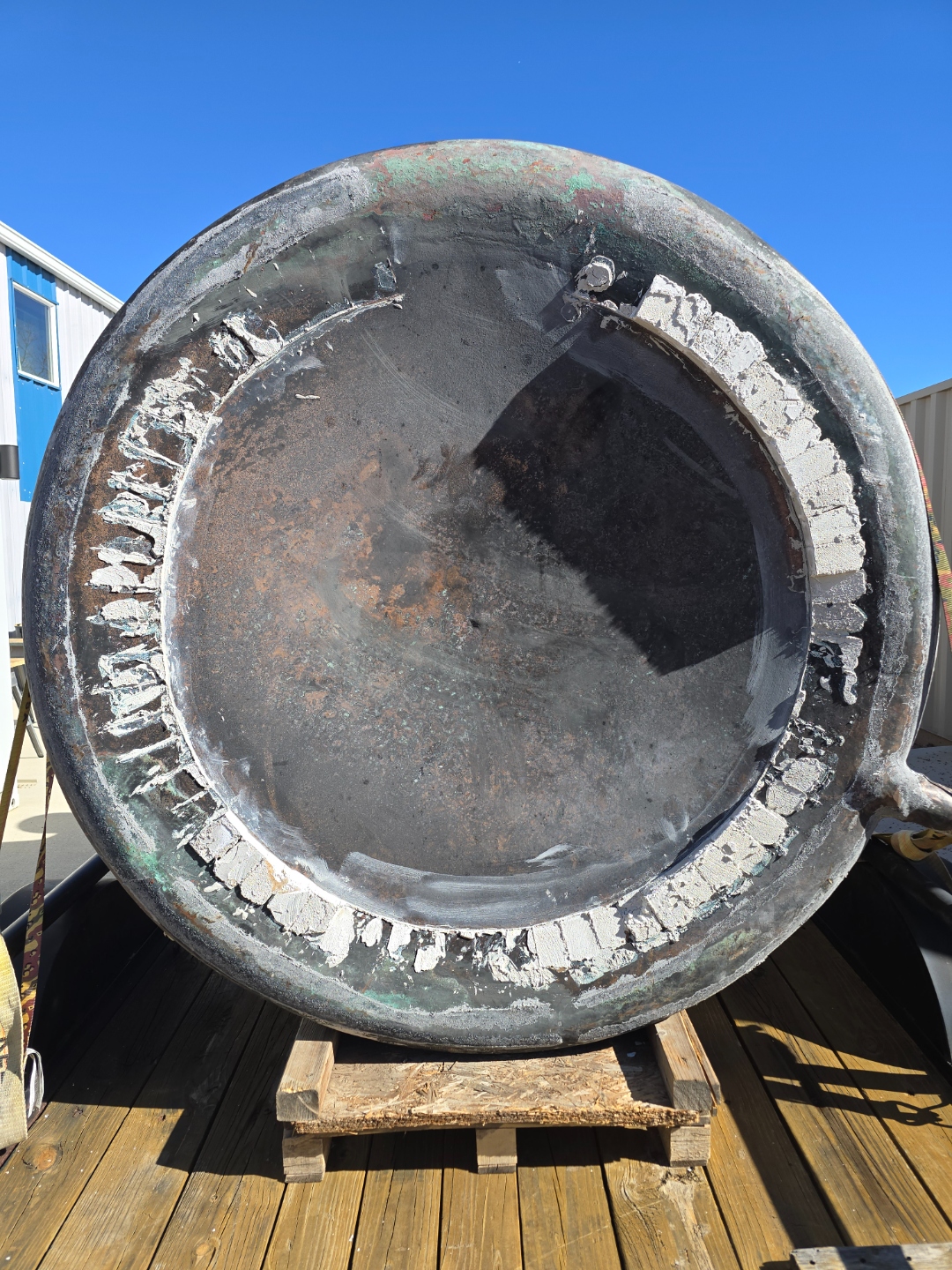
| Interior | Cross-brace support bar with center drain fitting |
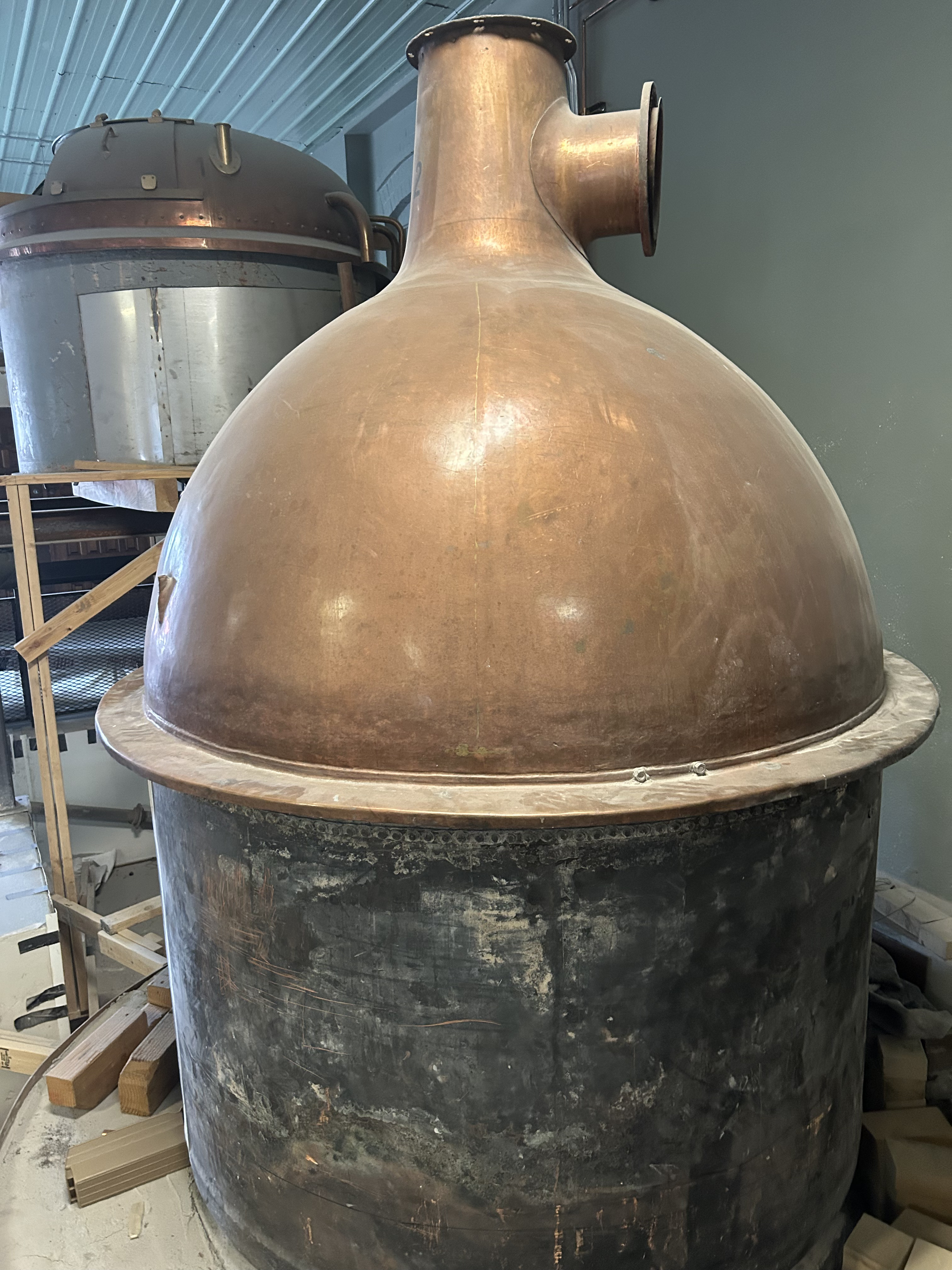
| Dome / Lid | Copper dome with brass pull handle |
| Opening | Flanged for brewhouse integration |
| Est. Weight | 500–800+ lbs |
| Origin | Kenzingen, Baden-Württemberg, Germany |
| Brewery | Brauerei zum Hirschen (Weber family, est. ~1649) |
Condition
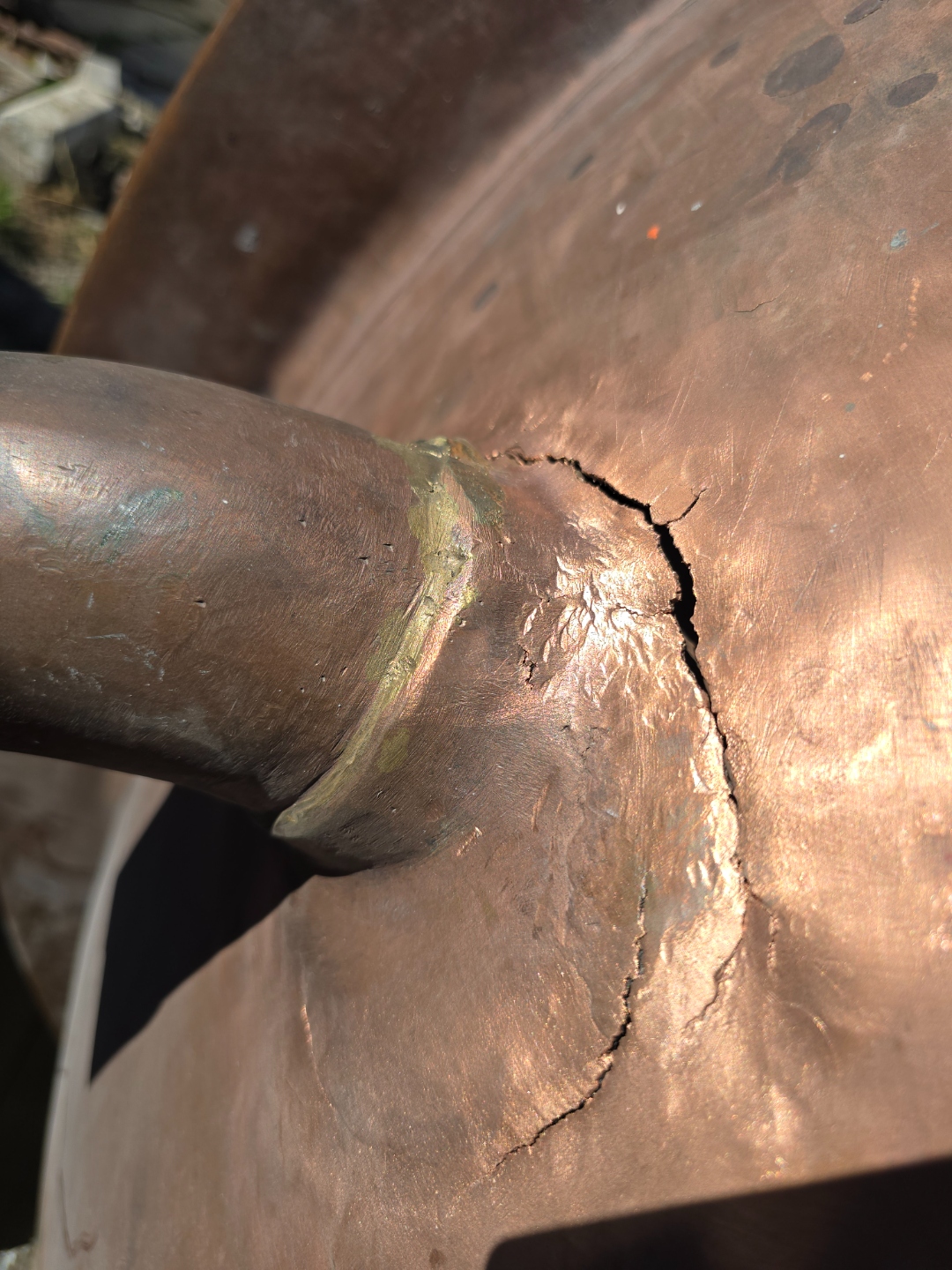
This is an authentic piece of industrial brewing equipment, not a reproduction. The condition is consistent with a century of active commercial use:
For Sale
Or Best Offer
New copper brewhouse equipment of comparable size
Cost to import a similar piece from Germany today
Current copper scrap value alone (500–800 lbs)
Ideal For
Craft breweries & taprooms — a jaw-dropping centerpiece that tells a real story
German beer halls & restaurants — authentic Old World atmosphere
Distilleries — potentially restorable to working condition
Hotels & hospitality venues — statement piece for lobbies and event spaces
Interior designers — working on hospitality or commercial projects
Breweriana collectors — brewing history enthusiasts and museums
Brewpubs opening or renovating — instant heritage and conversation starter
Cultural institutions — a tangible piece of European industrial history
Also Available
We also have five brand-new Bavarian Brewery Technologies LH25 stainless steel tanks — 25 hectoliters each, never used, still in original packaging.
View BBT Tanks →Serious Inquiries
Located in Longmont, Colorado. Buyer responsible for transport. Additional photos, measurements, or video available on request.